What is an LED?
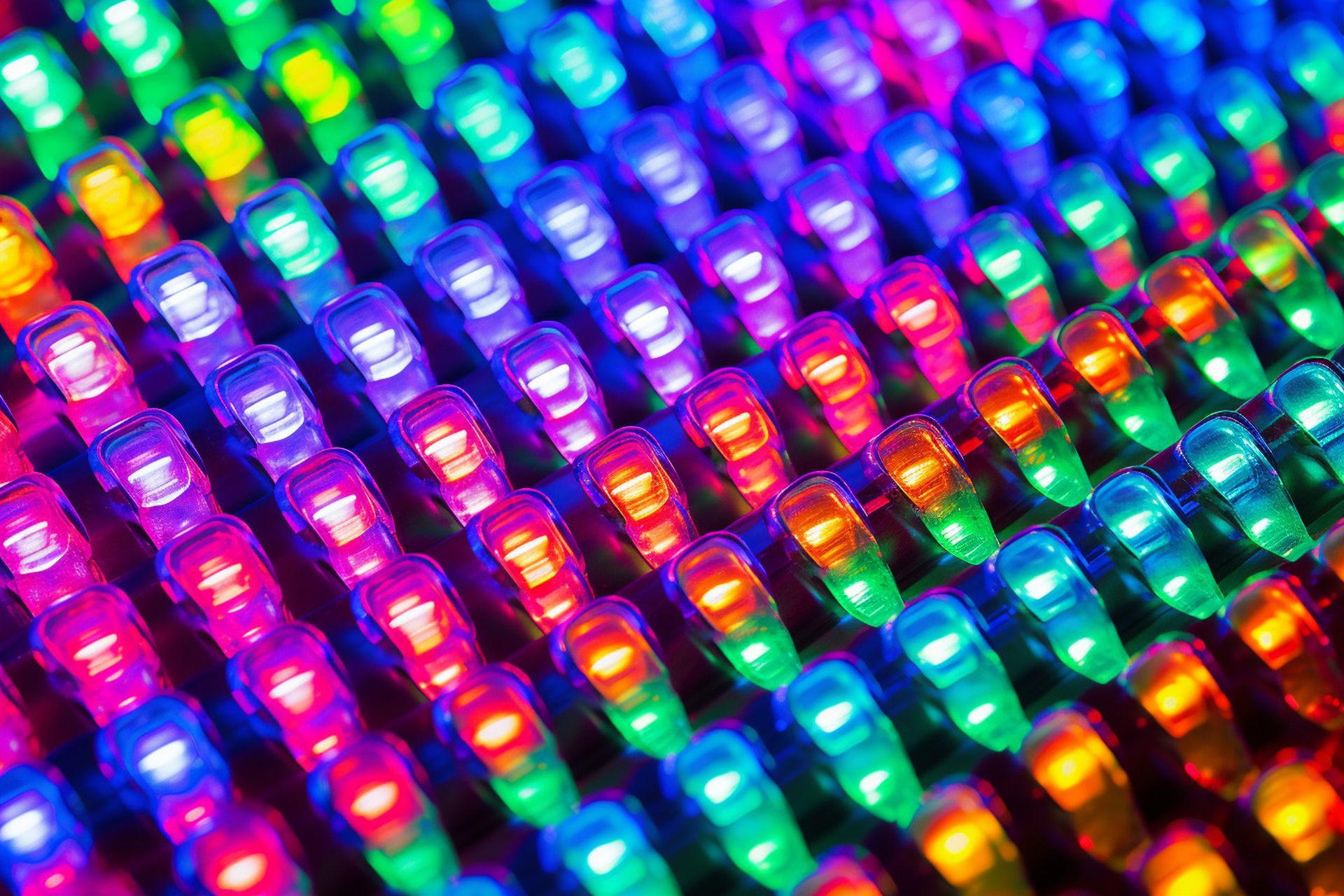
A light-emitting diode (LED) is a semiconductor device that emits light when an electric current passes through it. In LED technology, light is produced when the particles that carry the current (known as electrons and holes) combine with each other within the semiconductor material. Since light is generated in the solid semiconductor material, LEDs are referred to as solid-state devices.
The color of the light depends on the semiconductor material used in the manufacturing of the diode and can vary from ultraviolet (UV), through visible light, to infrared (IRED). Until the mid-1990s, LEDs had a limited range of colors, and in particular, blue and white LEDs were not commercially available. The development of LEDs based on gallium nitride (GaN) completed the color palette and opened up many new applications.
The main semiconductor materials used for the manufacturing of LEDs are:
- Indium Gallium Nitride (InGaN): High-brightness blue, green, and ultraviolet LEDs
- Indium Gallium Phosphide (AlGaInP): High-brightness yellow, orange, and red LEDs
- Gallium Aluminum Arsenide (AlGaAs): Red and Infrared LEDs
- Gallium phosphide (GaP): yellow and green LEDs
Types of LED
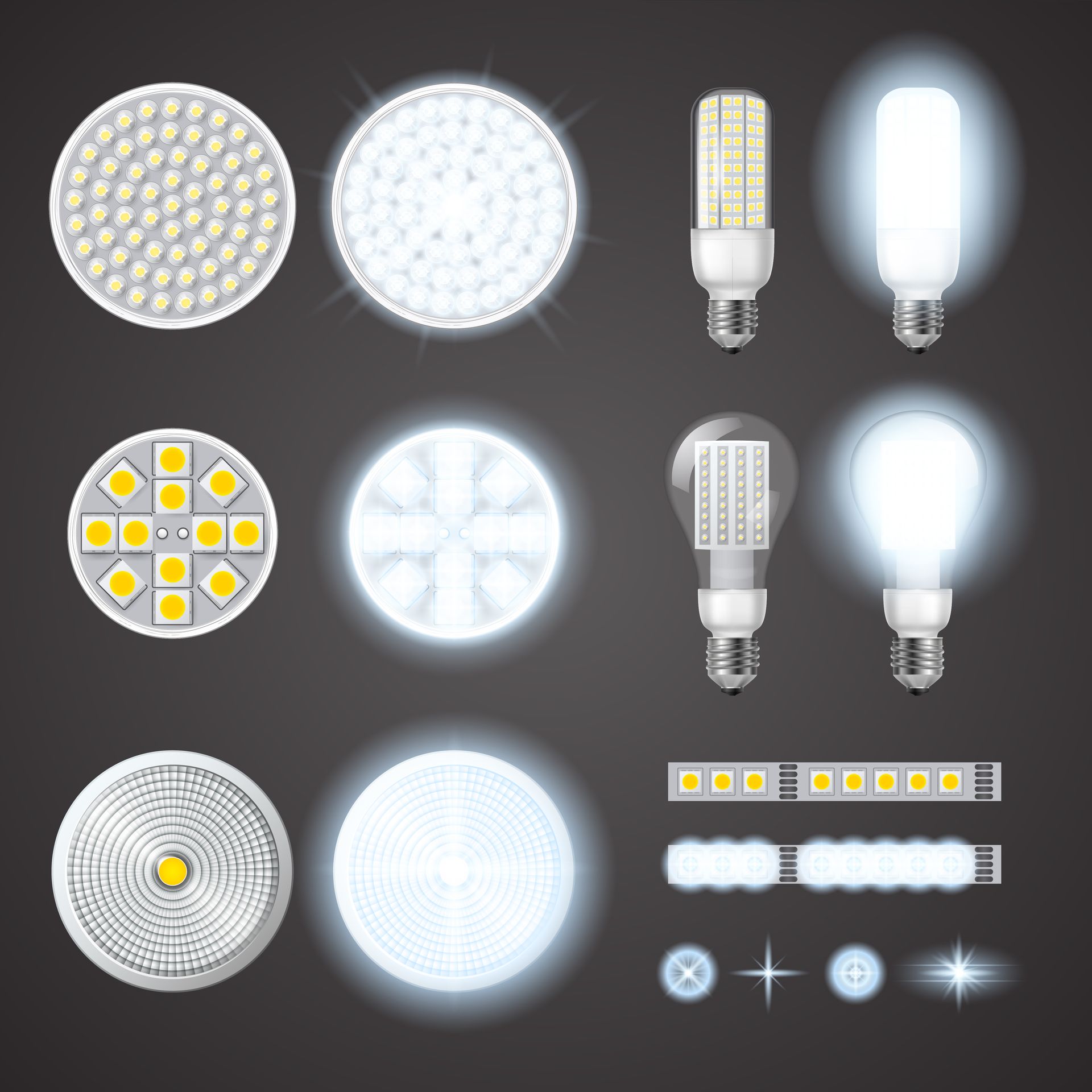
LED SMD (Surface-Mounted Device)
Small chips mounted on flat surfaces; widely used in strips and luminaires due to their high luminous density and efficiency.
LED COB (Chip on Board)
Multiple chips integrated into a single module provide a homogeneous light beam without visible spots; ideal for recessed or downlight applications.
LED de alta potencia
Designed for projects that require a lot of light, such as facades, parks, or industrial buildings; they stand out for their durability and performance.
LED flexibles
Flexible strips that adapt to shapes and corners; they provide versatility and creativity in design, whether for indoor or outdoor environments.
LED Light Applications
LEDs are used in all kinds of status indicators (on/off), signaling devices, and information panels. They are also used in the manufacturing of liquid crystal displays for computers, mobile phones, televisions, etc.
La tecnología LED es cada vez es más frecuente y es previsible que se incremente en el futuro, ya que tiene una eficiencia de hasta 150 lm/W que es 11,5 veces superior a la de una lámpara incandescente (13 lm/W), 1,7 veces superior a la lámpara fluorescente (90 lm/W) e incluso más alta que la lámpara de vapor de sodio de alta presión (132 lm/W).
|
Application |
Description |
Recommended LED type |
Usage examples |
|
Architectural lighting |
Highlights shapes, volumes, and textures in interior and exterior projects. Aesthetic, uniformity, and control are sought. |
LED SMD, COB, RGB |
Facades with color changes, backlit ceilings, stairs with indirect lighting, illuminated green walls. |
|
Urban facades and exteriors |
Functional and decorative lighting in public and private spaces. High resistance to weather conditions. |
High power LED, LED projectors, RGBW LED |
Parks, institutional buildings, hotels, monuments, backlit signage. |
|
Residential and commercial lighting |
Comfortable and efficient spaces with modern design. Aesthetics and functionality are combined. |
LED downlights, LED panels, flexible SMD strips |
Single-family homes, showrooms, restaurants, corporate offices. |
|
Industrial lighting |
It requires high luminous efficiency, resistance, and durability. Performance and low consumption are prioritized. |
LED High Bay, industrial LED floodlights, T8 LED tubes |
Warehouses, logistics facilities, workshops, loading and unloading areas. |
|
Accent and decorative lighting |
To highlight objects, create environments, or reinforce brand identity. |
LED strips, mini spots, linear systems |
Store displays, backlighting for furniture, branding in businesses, hotel corridors. |
|
Landscape lighting |
Integrate light with nature. Use of warm light and directed optics to highlight elements. |
IP65 LED projectors, LED beacons, waterproof strips |
Gardens, outdoor paths, fountains, living walls, illuminated pergolas. |
|
Technical or functional lighting |
Spaces where visual precision is essential. Focused on ergonomics and regulations. |
UGR<19 LED panels, linear luminaires, LED with DALI regulation |
Offices, classrooms, laboratories, hospitals, coworking spaces, workstations. |
|
Stage and dynamic lighting |
Create changing visual effects, ideal for cultural or entertainment spaces. |
RGB LED, DMX controllers, smart systems |
Theaters, convention centers, interactive museums, corporate events. |
Advantages of LED technology
- It is safer than traditional lighting because it is less polluting: it contains no mercury or tungsten. Additionally, using them reduces CO2 emissions by 80%.
- It lasts much longer, 70,000 hours of use (over 15 years if we turn it on for about 8 hours a day), and requires minimal maintenance.
- It does not generate heat, it does not burn to the touch (80% of the energy it consumes is converted into light, unlike the incandescent bulb, which loses that same percentage in the form of heat).
- Energy savings (consume up to 85% less than traditional light bulbs).
- It withstands more extreme temperatures than incandescent bulbs, as well as higher humidity and vibrations.
- Instant ignition.
- Resistant to a huge number of cycles without compromising its performance (the times it is turned on and off).
- It reproduces colors with great fidelity, with a color rendering index of 95 out of 100. It also has different light tones (cool, warm) to adapt to all types of environments.
Disadvantages of LED technology
- Higher initial investment: although amortizable in the long term.
- They require thermal control: heat sinks are essential for maintaining performance.
- Possible shadows if not distributed correctly: something to plan well.
Technical summary
LED technology represents the natural evolution for professional lighting projects. With types of LEDs such as SMD, COB, and high power, efficient, aesthetic, and durable solutions are achieved. Its advantages in energy savings, lifespan, and flexibility are undeniable, although they require good thermal management and appropriate design to avoid shadows or glare.
For architects, construction companies, and specifiers, LED light is a versatile tool that allows for highlighting volumes, optimizing spaces, and complying with sustainability regulations. Ultimately, the initial investment in light and LED is more than recovered through efficiency, durability, and light quality.